News
Ongoing and forthcoming projects
SHE DEVIL 14
MACRO
Museo d’Arte Contemporanea di Roma
29 April – 20 September 2026
The fourtheen edition of SHE DEVIL 14 focuses on one of the most fundamental human emotions: fear. responding to the hurges and tensions of contemporary life, the works on view approach this feeling through a plurality of perspectives and formats, including artists’ films, video performances, documentaries, and animation, exploring its many manifestations and modes of representation.
artists and curators of this edition:
Monira Al Qadiri, presented by Valentina Bruschi
Cecelia Condit, presented by Elena Magini
Nathalie Djurberg & Hans Berg
Raffaella Crispino, presented by Alessandra Troncone
Helen Anna Flanagan & Josefin Arnell, presented by Maria Lodovica Ferrari
Regina José Galindo, presented by Benedetta Casini
Camille Henrot, presented by Manuela Pacella
Laure Prouvost, presented by Caterina Taurelli Salimbeni
P.Staff, presented by Eloisa Magiera
Janis Rafa, presented by Paola Ugolini
Tabita Rezaire, presented by Alice Labor
Marianna Simnett, presented by Susanna Bianchini
Berta Tilmantaitė, Neringa Rekašiūtė, Rūta Meilutytė, Aurelija Urbonavičiūtė, presented by Alessandra Mammì
Yuyan Wang, presented by Dobrila Denegri
Camille Henrot
Dying Living Woman, 2005
Video, Scratching on film, 6’30’’
Soundtrack by Benjamin Morando
© ADAGP Camille Henrot
Courtesy of the artist, Mennour and Hauser & Wirth
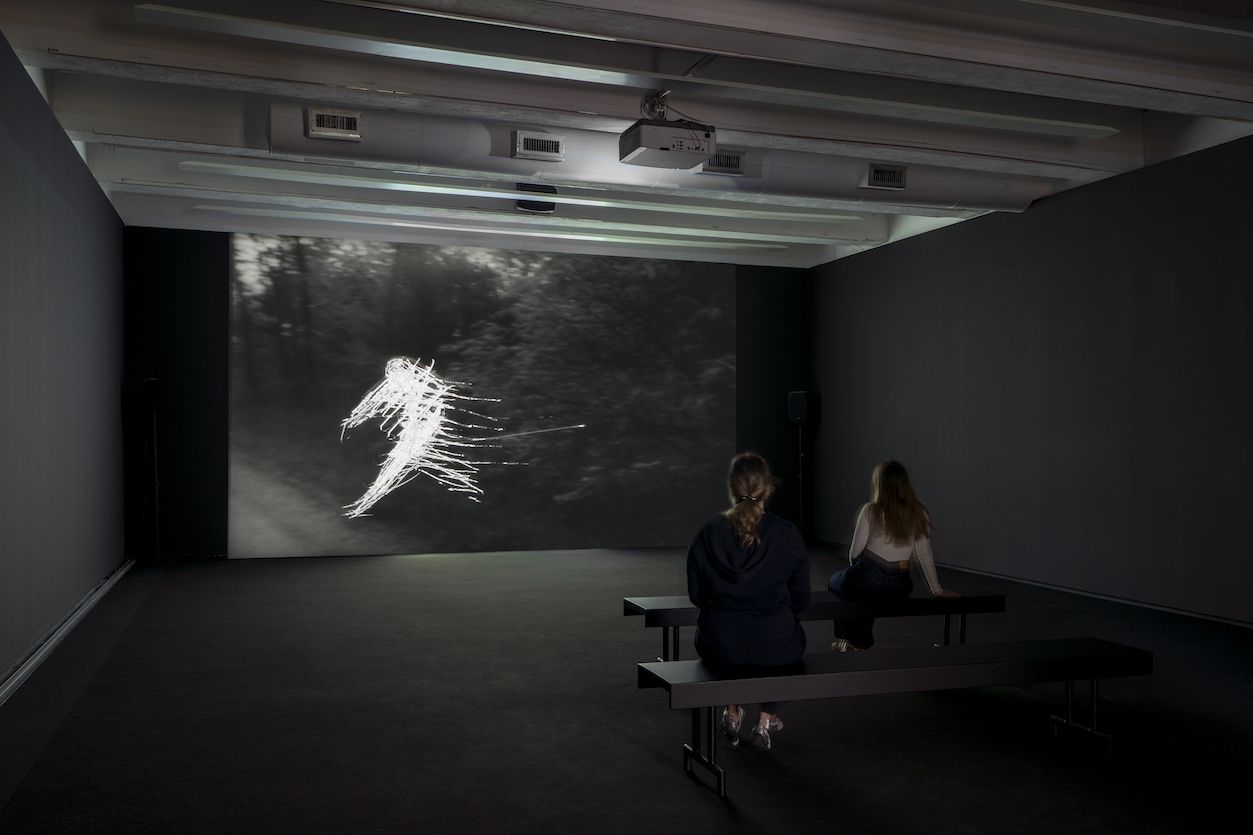
Camille Henrot, Dying Living Woman, 2005
SHE DEVIL 14 at MACRO
Photo by Ela Bialkowska – OKNOstudio
In George A. Romero’s famous debut film, Night of the Living Dead (1968), no one survives the living dead’s hunger for human flesh, not even one of the main characters, Barbara. Her relentless running and fearful movements are condensed into just over five minutes in Camille Henrot’s video, where the woman is caught between dying and still being alive —“dying living,” indeed. Through the manual removal, frame by frame, of Barbara – in a process the artist calls “desquamation” – the physicality of the film medium is revealed, as well as its fictional nature. The silhouette, scratched away, becomes suddenly brighter, offering a phantasmagorical glimpse of reality. Furthermore, the narrative is, in some ways, reversed. Although the opening scene matches the original film, the word “FIN” is scratched onto the section where the opening title appears, while Dying Living Woman stands out almost like an epilogue, appearing intermittently above the rhythmic movement of the fire. Then, almost suddenly, the video ends with a very brief glimpse of Barbara’s “true” appearance, restoring her cinematic and imaginative body.
MP
Cicala
A new bimonthly column for the relaunched print edition of “Flash Art Italia,” presented at Artissima in Turin in 2025.
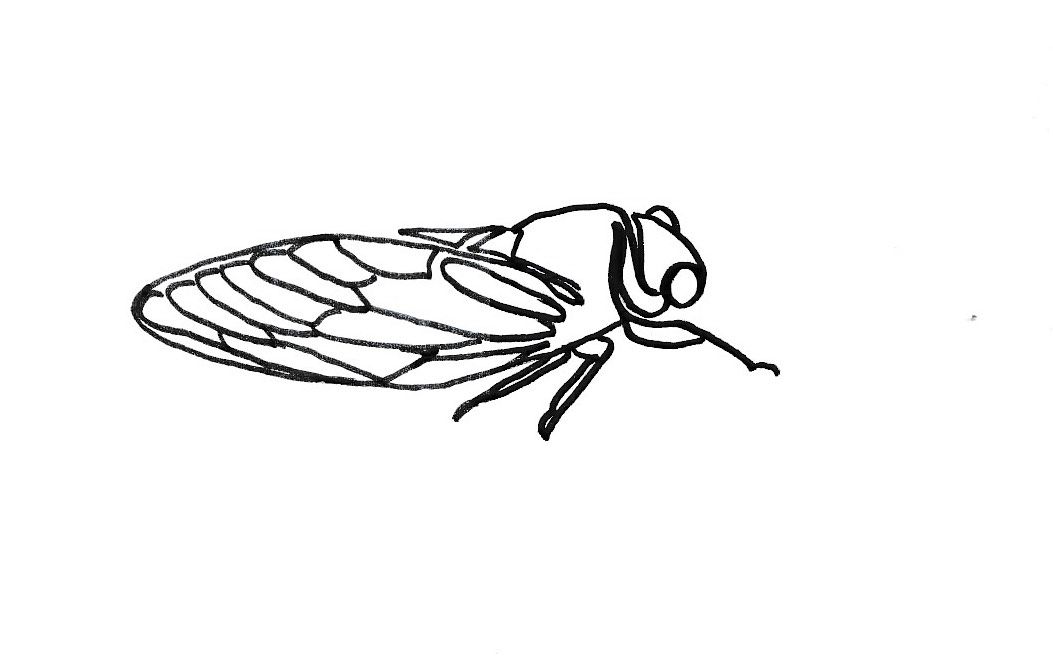
The column is dedicated to the unique aspects of Roman identity, exploring temporal expansions and epiphanic encounters with contemporary art. Exhibitions, artworks, and artists are presented in a concise and evocative style. The Cicada, with its love-filled song, serves as a metaphor for the desire to resonate again from within.
This column was created specifically for the readers of Flash Art Italia, so it is in Italian.
To read the online texts, click here.
La mosca
The doorbell rings.
It’s not the postman, it’s not advertising, it’s not a registered letter.
You can read it if you like.
The fly is a gift.
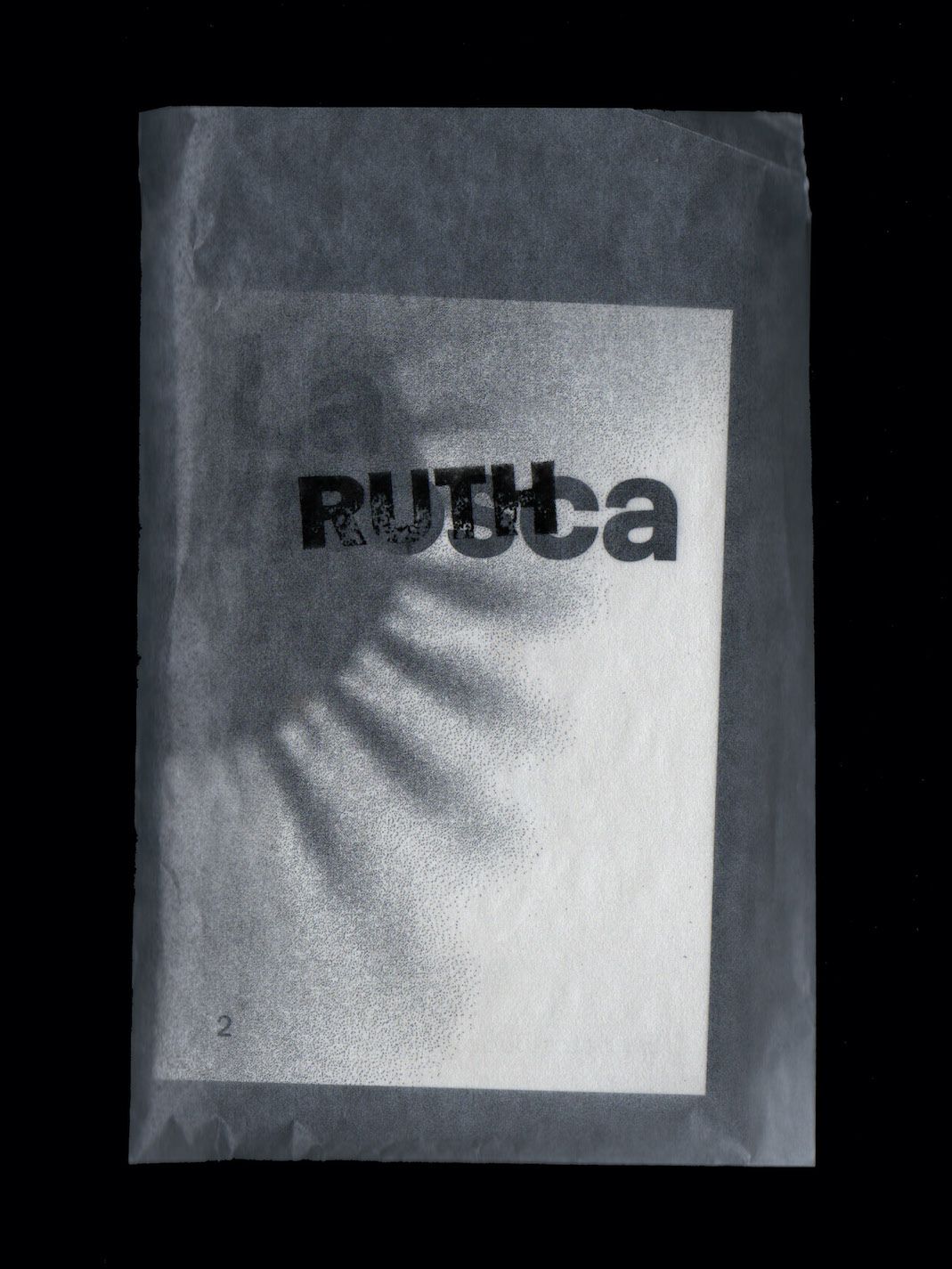
La mosca is RUTH’s first printed project, published by Beauroma Books. It is a small editorial series in which each issue consists of texts selected on the basis of thematic similarities or similar approaches to writing, mainly extracted from the online platform. La mosca was delivered directly to mailboxes, following a random principle that does not involve mailing lists and aims to reach a diverse and heterogeneous audience. La mosca was intended as a gift, and recipients can open it, read its contents, leaf through a few pages, throw it away, or use it for other purposes.
Read more in this wonderful text written by our beloved Giulia Crispiani > La mosca | NERO.
Tell me stories!
All the contributions for the online column Tell me stories! (at the moment is available online only the editorial published on May 2020) are now collected into a book, published by Politi Seganfreddo edizioni, in collaboration with Flash Art.
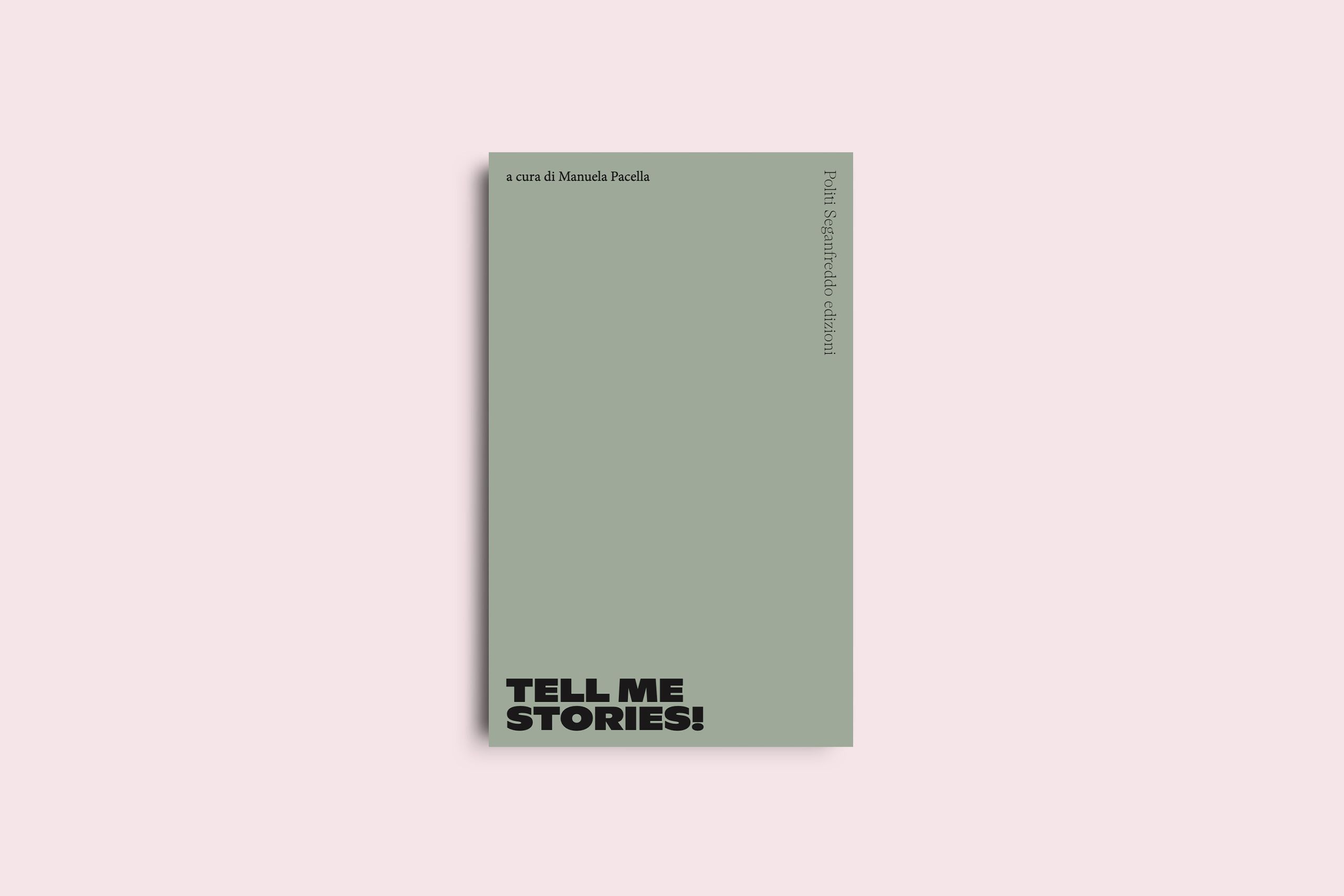
Texts by
Cecilia Canziani, Valentina Cipullo Callegarini, Giulia Crispiani, Marta Federici, Allison Grimaldi Donahue, Valerio Mannucci, Anneleen Masschelein, Manuela Pacella, Alda Palermo, Catherine Parsonage, Luisa Villegas G. con Carolina Chacón Bernal
on
Kathy Acker, Gloria Anzaldúa, Anna Banti, Dodie Bellamy, Daniela Cascella, Maria Fusco, Kenneth Goldsmith, Juliet Jacques, Jill Johnston, Wayne Koestenbaum, Chris Kraus, Quinn Latimer, Yve Lomax, Maggie Nelson, Ariana Reines, Silvia Rivera Cusicanqui, Georgia Sagri, Rebecca Solnit, Lynne Tillman, Jacob Wren, Kate Zambreno
RUTH is:
Manuela Pacella (founder, 2020–)
Lola Giffard-Bouvier (2024–)
Serena Schioppa (2025–)
ZOLLA Collettivo (Alice Giuntini, Eleonora Sacco, Marco Scirè, Francesca Senatore. 2025–)
Michela Ceruti (2026–)
Michele Angiletta (2026–)
Francesca Quagliano (2026–)
Essential members of RUTH were:
William Paolo Guarriello (2020–2022)
Giulia Gaibisso (2024–2025)
Valerio Gelsomini (2025)
RUTH has partnerships with:
NERO
Beauroma Books
Read Who Is Ruth on NERO Editions.